Camden's climate, river and streets
Cold winters, hot summers
At Camden Airport (1991 to 2020 averages), July's mean minimum is 3.1 degrees and January's mean maximum 29.7. The records run from minus 6.0 to 46.4 degrees.
Inside a bend of the Nepean
The Dictionary of Sydney says the river wraps the town centre on three sides and regularly floods the surrounding farmland and the lower parts of town.
Two heritage conservation areas
Camden Council says its LEP identifies the Camden Town Centre and Struggletown heritage conservation areas. The old grid of streets is intact, with Victorian and Art Deco shopfronts and Federation and Californian bungalows on the Menangle Road ridge.
Mostly houses
At the 2021 Census, 73.8% of Camden's occupied homes were separate houses, 17.2% semis or townhouses and 8.4% flats. 32.7% were rented.
Climate zone 6
The ABCB's climate zone map puts the Camden council area in zone 6 (mild temperate).
Heating comes first
Choose a reverse cycle system on its heating figure. The energy label shows heating capacity at 7 degrees and at 2 degrees, and on a Camden July morning the 2 degree figure is the honest one. When it's cold and damp outside, Mitsubishi Electric says the unit can stop for up to 10 minutes to defrost the outdoor unit; that's normal.
If you heat with gas, Energy Safe Victoria and Better Health both advise a service by a licensed gasfitter at least every two years. Book it in autumn. Our reverse cycle or gas guide compares the two.
On the floodplain
If your home is in a lower part of town, find out your flood levels before deciding where the outdoor unit and any ducted unit under the house will sit. Camden Council says a Flood Certificate gives detailed flood information for a specific property, such as flood levels and flood planning levels. Share it with the installer when you ask for quotes.
In the town centre and Struggletown
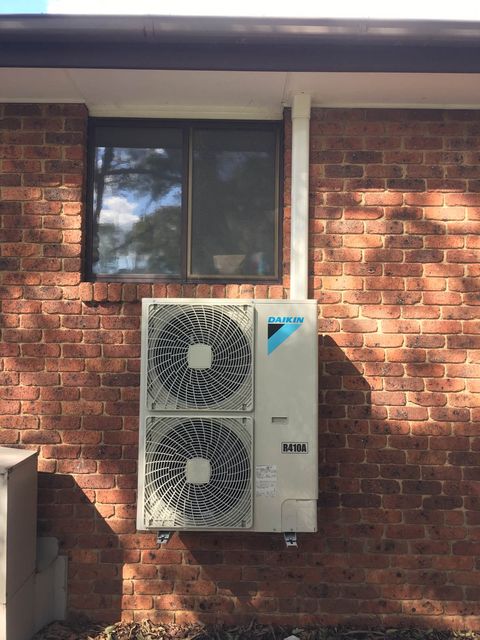
Camden Council says heritage listing doesn't stop changes, and that changes respecting what makes the place special are encouraged. In practice, keep outdoor units and pipework off the street frontage of an old shop or bungalow, and ask council early whether your work needs approval.
What we'd do
What we'd do in Camden
We'd size for July before January, and ask for the heating output at 2 degrees in writing. On a low-lying lot we'd get the Flood Certificate first; in the heritage areas we'd talk to council before anyone drills. Licence-checked installers around Camden who do heating and cooling work can see your job, and only the one who takes it gets your details. Should no Camden installer take it within 48 hours, installers in other parts of NSW may see it as well.