One region, several climates
What counts as Western Sydney
By one common definition, it's 11 council areas: Blacktown, Blue Mountains, Camden, Campbelltown, Cumberland, Fairfield, Hawkesbury, Liverpool, Parramatta, Penrith and Wollondilly, with Parramatta as the major centre.
The outer west takes the heat
Liverpool averages 41 days a year above 30 degrees and Penrith 67, against 15 in the CBD. AdaptNSW says Western Sydney averages 10 to 20 days a year above 35. On 4 January 2020, loggers across the City of Penrith recorded up to 52 degrees at Berkshire Park.
The north-west and south-west get the frost
Nights below zero happen more often in the far-western suburbs such as Campbelltown, Camden, Penrith and Richmond. Richmond averages 17 a year and holds the metropolitan record of minus 8.
Hot desert winds
North-westerlies occasionally bring hot winds from inland that push temperatures as high as 40 degrees. That's the afternoon a system's capacity gets tested.
Why newer estates can run hotter
The western suburbs have a much stronger urban heat island effect than those east of the CBD. It's put down to sun-absorbing materials like black asphalt and dark roofs, heat from cars and fewer natural areas. Streets with lower tree cover, usually in the recent suburbs, run hotter, and newer developments tend to be less leafy than established ones.
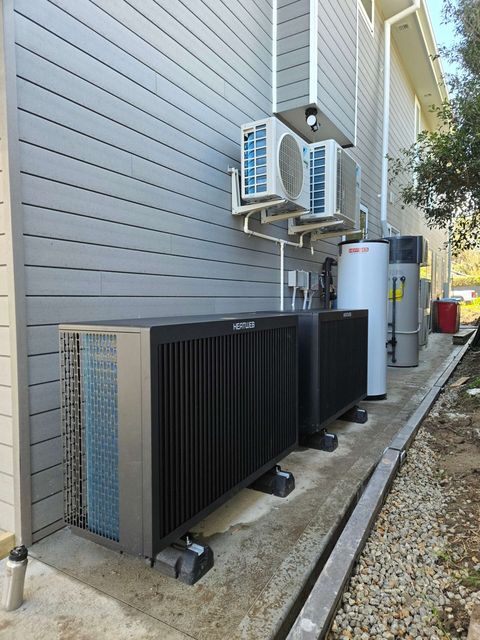
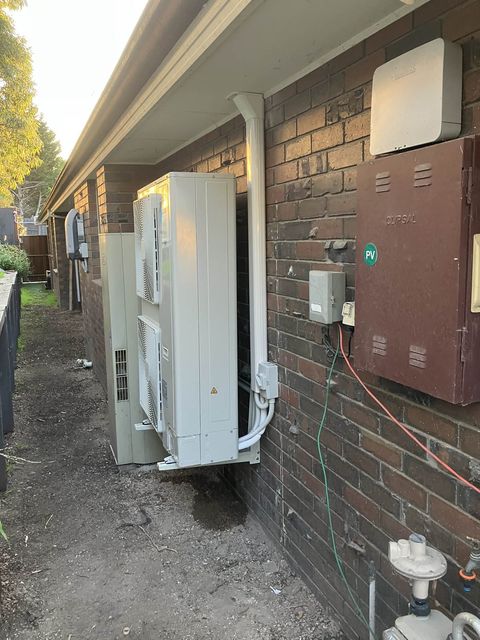
For a new house, that means two things. Size the system for your street, not a brochure: ActronAir says capacity falls away above 35 degrees, using the example of a 14 kW system dropping to 10 or 12 kW. And give the outdoor unit room to breathe, because it's working hardest on the days the street is hottest.
Is evaporative cooling worth a look out here?
It's more of a western question than a coastal one. Seeley says evaporative cooling generally suits hot, dry climates, and Penrith's January afternoons average 47% humidity, against 60% at Observatory Hill. But it cools only and needs windows open, so you'd still need heating for winter. Compare both in evaporative or refrigerated.
What we'd do
What we'd do in Western Sydney
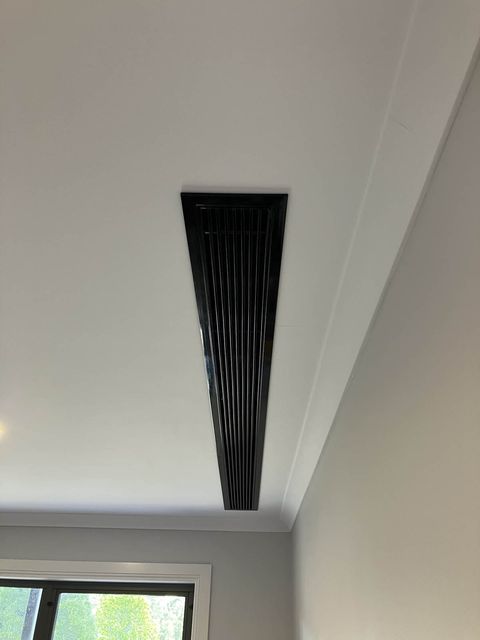
We'd size for the 40 degree afternoon and then check the heating figure at 2 degrees on the label, because frost country starts not far from the hottest suburbs. In a new estate, we'd zone a ducted system so we're only cooling the rooms in use. We'd want an installer who works the west every summer. Licence-checked local installers who do that kind of work will see the job you send, and only the one who takes it gets your contact details. If no installer in the west takes it within 48 hours, ones from other parts of NSW may see it too.