
Newcastle, New South Wales
Heating and cooling in NewcastleSticky at Nobbys, hotter and drier a few suburbs west.
Newcastle homes need both cooling and heating, and the balance shifts with distance from the water. On the coast, summers are mild but humid. Just 8.5 km inland they run hotter and drier, and winter nights get colder. Work out which Newcastle you live in before you choose a system.
What makes Newcastle different
Two climates, 8.5 km apart
At Nobbys Signal Station on the coast, January's mean daily maximum is 25.7 degrees and July's mean minimum is 9.4. The Newcastle University station, west-north-west of the CBD, averages 29.5 and 7.3 for the same months. Same city, noticeably different summers and winters.
Humid by the sea
Afternoon humidity at Nobbys averages 74% in January and 77% in February, with a February dew point of 18.9 degrees. At the university station it's 57% in January. Damp air feels warmer than the thermometer says, and it's one reason sizing matters: Rinnai says an oversized system short cycles and dehumidifies less effectively.
Hot westerly days
Hot west and north-westerly winds can push Newcastle past 40 degrees. The record is 42.5 at Nobbys and 44.9 at the university. AdaptNSW says much of the Hunter Valley sees 10 to 20 days a year above 35, with fewer near the coast.
A real winter
The National Construction Code lists Newcastle, and nearby Williamtown, as climate zone 5: warm temperate. That means a heating season as well as a cooling one, so a system that only cools leaves half the year uncovered.
Houses, terraces and flats
At the 2021 Census, 69.0% of occupied homes in the City of Newcastle were separate houses, 16.2% were semis, terraces or townhouses and 14.2% were flats or apartments. About three in ten homes share a wall, and that changes where an outdoor unit can sit.
Gas and power
Newcastle is on Ausgrid's electricity network, and Jemena's gas network supplies natural gas here, so plenty of households have both options to weigh up when an old heater dies.
Which jobs come up most in Newcastle?
Split systems are the everyday job, particularly in apartments and terraces where there's one living area and a couple of bedrooms to look after. In a unit block, the owners corporation gets a say first: The Good Guys, for one, says body corp approval is required before any work in a multi-storey apartment block. Our page on apartments and strata explains how that usually runs.
In the separate houses that make up most of the city, ducted air conditioning is the other big decision. If you're in the warmer western suburbs, it needs sizing for their hotter afternoons rather than the coastal average.
Then there are the westerly days. A system that copes with a typical January afternoon at Nobbys can fall behind when a westerly takes the temperature past 40, and ActronAir says air conditioners lose cooling capacity above 35 degrees anyway. Near the coast, servicing matters more than people think, because humid air and salt both work on a system between visits.
Reverse cycle, gas and the ESS
With Jemena gas in many streets, some Newcastle homes are choosing between gas heating and reverse cycle. The ACT Government says a gas system heats quickly but reverse cycle has much lower running costs. Our reverse cycle or gas guide goes through the trade-offs.
If you're adding or replacing an air conditioner, ask whether the installer offers the NSW Energy Savings Scheme discount. It comes off the quote through an Accredited Certificate Provider that works independently of the NSW Government, and the nomination form has to be signed before installation begins. A new gas space heater installed from 1 July 2026 can't get it at all.
What we'd do
What we'd do in Newcastle
Start with your side of the city. Near the coast, we'd ask about coil protection and a sheltered spot for the outdoor unit, and make sure the system isn't oversized for humid days. Further inland, we'd size for 40-degree westerlies and the colder July nights. Then we'd want an installer who does that exact job every week to look at the home before quoting.
What this work looks like
Photos from real jobs in Melbourne, to show what the work looks like. They aren't from an installer near you.

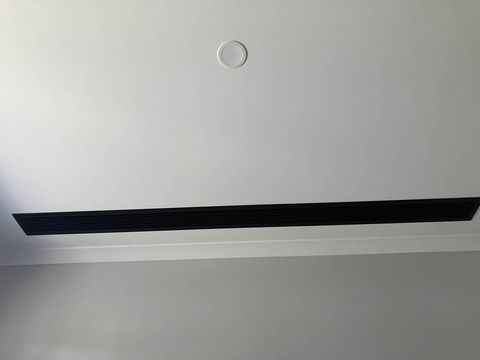
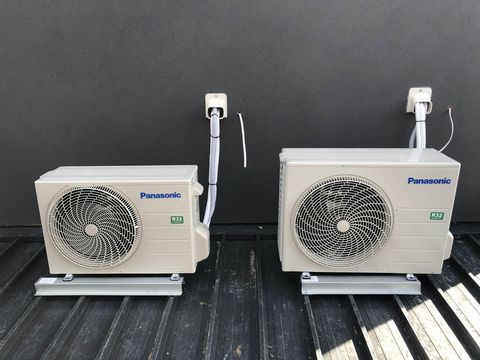
Heating and cooling jobs in Newcastle
- Air conditioning installation in NewcastleHow Newcastle's coast, inland heat, terraces and strata change a new air conditioner install.
- Ducted air conditioning in NewcastleSizing and zoning ducted reverse cycle for Newcastle's westerly days and winter nights.
- Air conditioning service in NewcastleMould, salt and westerly heat: when to book a Newcastle service and what it should cover.
- Air conditioning repairs in NewcastleWesterly heat, salt air and humid drips: what goes wrong in Newcastle and who to call.
Suburbs and areas around Newcastle
Questions people ask
Do Newcastle homes need heating as well as cooling?
Does salt air affect air conditioners in Newcastle?
Is evaporative cooling a good fit for Newcastle?
How do I check an installer's licence in NSW?
Can you find me an installer in Newcastle?
Ready for the right installer to take a look in Newcastle?
Your postcode and three quick questions. Licence-checked local installers who specialise in your kind of job see it, and the one who takes it gets in touch to quote.
Read next
- 01Air conditioning near the coastSalt, coil coatings, warranty fine print and where the outdoor unit should go near the sea.
- 02Reverse cycle or gas heating?Efficiency, cold mornings, carbon monoxide and the Victorian gas rules, in plain terms.
- 03NSW Energy Savings SchemeHow the ESS discount works on a new or replacement air conditioner, and what's left out.
- 04Heating and cooling in New South WalesNSW air conditioning licences, the Service NSW check, the ESS discount and strata approval.
- 05What size air conditioner do I need?Rough kW sizes by room, what changes them, and how an installer should check the number.
Where this information comes from
- Wikipedia Newcastle, New South Wales, 28 October 2026
- NSW Office of Environment and Heritage (AdaptNSW) Hunter climate change snapshot (NARCliM 1.0 edition; Climate of the region section), 28 October 2026
- Australian Building Codes Board NCC 2016 Volume One, Part A1 Interpretation, Table A1.1 Climate zones for thermal design: various locations, 28 October 2026
- Australian Bureau of Statistics 2021 Census QuickStats: Newcastle (LGA15900), 28 October 2026
- Wikipedia Ausgrid, 28 October 2026
- Jemena Jemena Gas Network, 28 October 2026
- NSW Government (NSW Climate and Energy Action) Air conditioner upgrade incentive (Energy Savings Scheme), 28 October 2026
- NSW Government (Minister for Energy) Energy Savings Scheme (Amendment No. 1) Rule 2025, with notice of approval, 12 September 2025
- NSW Government (Energy NSW) Air conditioner upgrade incentive, 6 February 2026
- NSW Government Air conditioning and refrigeration work, 23 October 2026
- Service NSW Check a builder or tradesperson licence, 15 August 2025
- Rinnai Australia Ultimate split system air conditioner size guide, 28 October 2026
- ActronAir What size air conditioner do I need?, 28 October 2026
- ACT Government, Everyday Climate Choices Heating for your home, 28 October 2026
- Seeley International Reverse cycle vs evaporative cooling: what works best in Australian homes?, 28 October 2026
- Daikin Australia Warranty card (linked from daikin.com.au/support/warranty), 5 March 2026
- Home Services Network Pty Ltd (The Good Guys Home Services) Air conditioning installation, 28 October 2026
- Blufire Pty Ltd Blufire's lead engine rules (supplied 29 October 2026) and Privacy Policy, 29 October 2026
We don't publish prices. Every home is different, so an installer's written quote is the only real number. How we write and check these pages.