What a Newcastle service is up against
Damp summer air
Nobbys averages 74% afternoon humidity in January and 77% in February, with a February dew point of 18.9 degrees. Mitsubishi Electric says dirty filters cause condensation in the unit, which helps mould grow. In this climate, clearing that out is the main thing a service does.
Salt on the coast
ActronAir's warranty terms describe the extra protection needed in sea air as regular washing down of the outdoor unit, panels and coils with a mild detergent. Daikin's card also leaves corrosion protection in sea air to the owner. A coastal service should include it.
Hotter and drier inland
The Newcastle University station averages a 29.5-degree January maximum and 57% afternoon humidity. Out there the unit works harder on summer afternoons, so a clean coil and clear airflow around the outdoor unit count for more.
Heating in July
Newcastle sits in climate zone 5, and July nights average 7.3 degrees at the university station. If your reverse cycle unit is the main heater, it's earning its keep in winter too, and it should be checked in heating mode.
When to book in Newcastle
Mitsubishi Electric recommends a professional service once a year, and ActronAir's warranty sets residential maintenance at once every 12 months. Daikin suggests a technician looks the unit over at the start of every summer, which in Newcastle means spring, before the first hot westerly.
If the system does most of its work as a heater, an autumn booking makes more sense. And if it's started smelling musty, dripping or rattling, don't wait for the yearly visit: that's a repair job as well.
What a Newcastle service should cover
- Filters, coil and fan inside the indoor unit cleaned, with a look for mould.
- The drain flushed and checked so water runs away freely in humid weather.
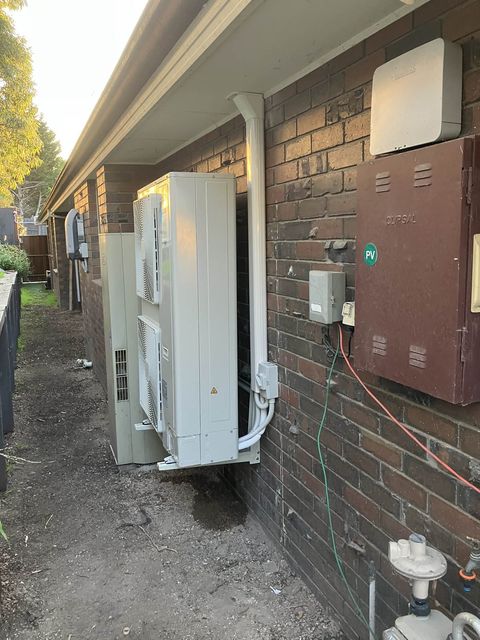
- The outdoor unit cleared, washed down the way the brand asks, and checked for rust on the casing and brackets.
- The refrigerant charge checked by someone holding a full RAC01 licence.
- Electrical connections tightened and the system run in both cooling and heating.
- A written list of anything found, with the business's RTA number on the invoice.
Between visits
You can
- Clean the filters on your manual's schedule. Daikin says every two weeks as a general rule, and at least monthly through summer.
- Switch off at the power before you take them out, and dry them in the shade.
- After cooling on a sticky day, let the fan run for a while. Mitsubishi Electric recommends fan mode after cool or dry to dry out the inside of the indoor unit.
- Note the dates you rinse or service the outdoor unit, in case you ever claim on the warranty.
Leave to a licensed installer
- Taking the indoor unit's covers off to clean the coil, fan and tray.
- Washing the outdoor coil properly without flattening the fins.
- Anything to do with the refrigerant, which needs a licence.
- Units on roofs or high walls.
What we'd do
Our take for Newcastle
Near the water, we'd book the service in spring, ask for the outdoor unit to be washed and the fixings checked, and keep the invoice with the warranty card. Inland, we'd still go yearly, timed for whichever season the system works hardest. And we'd want a technician who services coastal units every week, because they'll recognise salt damage early.