Sydney facts for a small business
Your suburb changes the load
Penrith averages 67 days a year above 30 degrees and Liverpool 41, against 15 in the CBD, because the sea breeze doesn't reach 9 km inland. A glass shopfront facing west in Penrith works its system far harder than one by the harbour.
The ESS is open to small businesses
Energy NSW says small businesses, as well as households, may be eligible for the air conditioner incentive. It runs through an installer partnered with an Accredited Certificate Provider, and the nomination form comes before the install.
Same licences as a house
NSW doesn't relax the rules for business premises. Air conditioning work, including its wiring, needs a licence or certificate, and advertising it needs a current contractor licence.
Which jobs fit, and which don't
Good fits: wall splits, a multi-split across a few rooms, a small ducted fit-out, or indoor units that tuck out of sight. Mitsubishi Electric describes bulkhead units as built to blend into bulkheads or drop ceilings, which suits plenty of shop fit-outs, and ceiling cassettes are another option.
Poor fits: central plant, chillers or a building-wide system. That's engineered work, and we'd rather say so up front than send you someone out of their depth. The national commercial air conditioning page draws the line in more detail.
Four things to settle before you sign
The commercial warranty terms. Toshiba's certificate gives its hi-wall, multi and Digital systems 7 years in a home and 5 years in commercial use, and Seeley gives Braemar reverse cycle 2 years in commercial use against 5 at home.
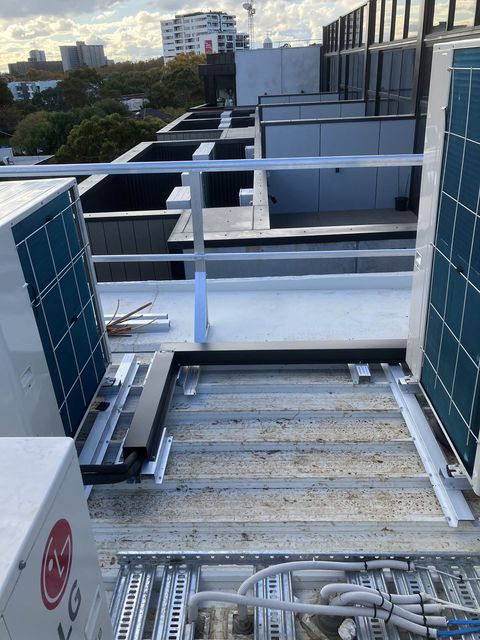
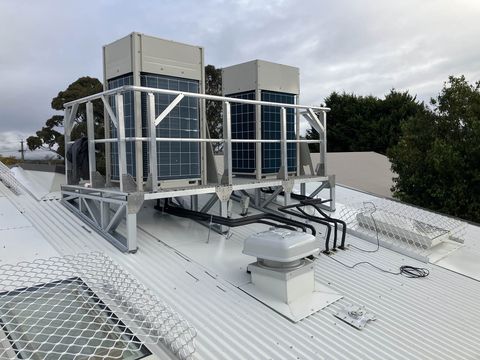
The landlord's consent, in writing, before an outdoor unit goes on the roof or an outside wall. In a strata building, the owners corporation's rules apply as well.
A service plan. A café or office runs its system for long hours, and Gree's card voids the warranty if maintenance isn't done at intervals of no more than 12 months.
Running costs, worked out properly. Take the unit's input power in kW, multiply by the hours you trade, then by your electricity rate. Our running cost tool does it for you.
Your homework, and the installer's
You can
- Write down your opening hours and the hottest part of the trading day.
- Count the people, ovens, fridges or computers that share the space.
- Ask the landlord or building manager about roof and wall access.
Leave to a licensed installer
- Sizing that accounts for customers, equipment and glass.
- New circuits, and 3-phase where the system needs it.
- Commissioning and the compliance certificates.
What we'd do
Our take for a Sydney business
We'd size it for the busiest, hottest trading afternoon, choose a model whose commercial warranty is spelled out in writing, and book yearly servicing from the start. If it's bigger than a few units, call a commercial mechanical contractor first. Send us the details either way, and we'll say plainly whether we have the right installer for it.